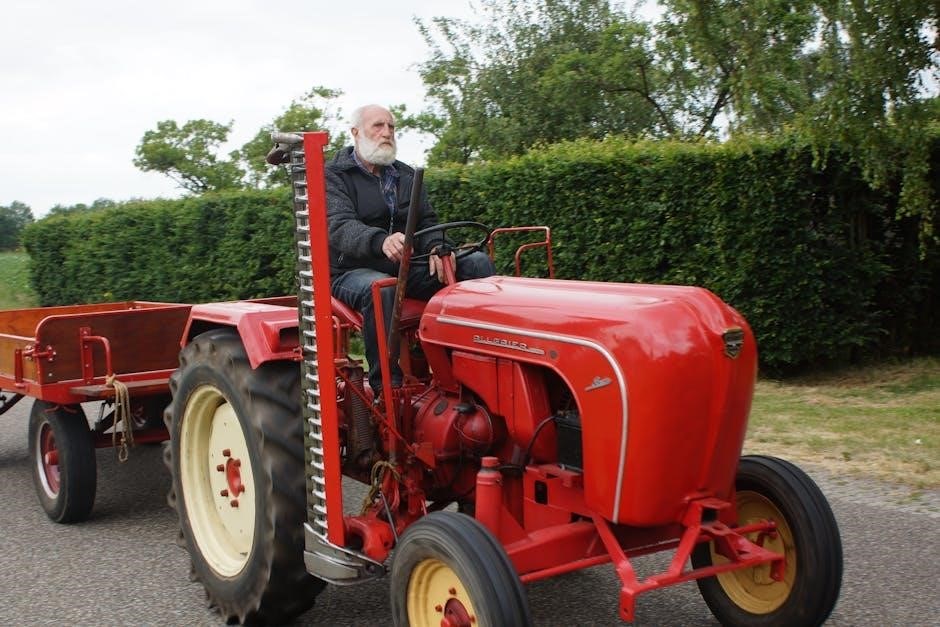
Delving into the world of vintage machinery, this manual serves as a crucial resource for owners and restorers of 1958 Oliver tractors, offering detailed parts information.
Specifically, catalogs like those for the 471, 480, 125, and 145 models highlight the importance of accurate component identification for successful maintenance and repair.
Furthermore, understanding the 133 new parts and updated applications detailed within these resources is vital for preserving these classic agricultural machines.
Historical Context of Oliver Tractors
Oliver tractors boast a rich heritage, originating in the late 19th century with the South Bend Iron Works. By 1958, the company had established itself as a prominent force in American agriculture, renowned for innovative designs and robust construction. The brand’s commitment to quality resonated with farmers seeking reliable machinery for demanding tasks.
The late 1950s represented a pivotal era for Oliver, witnessing the production of models like the 55, 60, 66, and 70, each tailored to specific farming needs. These tractors incorporated advancements in engine technology and hydraulic systems, enhancing efficiency and versatility. Simultaneously, the demand for specialized implements, such as manure spreaders (models 490 and 590), spurred the creation of detailed parts catalogs.
Consequently, the 1958 Oliver tractor parts manual emerged as an indispensable tool, reflecting the company’s dedication to supporting its customers with comprehensive documentation for maintenance and repair. This historical context underscores the enduring legacy of Oliver tractors and the significance of preserving their functionality through readily available parts information.
Importance of a Parts Manual
A 1958 Oliver tractor parts manual transcends a simple list of components; it’s a lifeline for preserving these vintage machines. Accurate identification of the 133 new parts and updated applications, as detailed in catalogs for models like the 471 and 125, is paramount for correct repairs.
Without a manual, sourcing replacements becomes a frustrating endeavor, potentially leading to incorrect parts and further complications. Detailed diagrams and precise part numbers, crucial for ordering, are readily available within these resources. The manual also aids in understanding complex systems, like the hydraulic components, ensuring proper functionality.
Moreover, for restoration projects, a parts manual serves as a blueprint, guiding owners through the process of returning their Oliver tractor to its original condition. It empowers both seasoned mechanics and enthusiastic hobbyists to confidently tackle maintenance and repairs, safeguarding the legacy of these iconic tractors.

Understanding the 1958 Oliver Tractor Models
Recognizing variations between the 55, 60, 66, and 70 models is key, as parts catalogs – like those for the 490 and 590 – differ accordingly.
Oliver 55 and 60 Models — Key Features
The Oliver 55 and 60 tractors of 1958 represented a significant step in agricultural technology, demanding a comprehensive understanding of their components for effective maintenance and restoration. Parts manuals, such as those detailing PTO and spreader implements (like the 471 and 480 models), become invaluable resources.
These models featured robust engines and transmissions, requiring specific parts for optimal performance; Identifying these components through detailed diagrams within the parts manual is crucial. Common areas needing attention include engine parts, transmission components, and hydraulic system elements.
Furthermore, understanding the interchangeability of parts, as highlighted in updated catalog data, can simplify sourcing replacements. The 55 and 60’s design necessitated specialized gaskets, seals, belts, and hoses, all meticulously documented within the official 1958 parts manual.
Oliver 66 and 70 Models ― Key Features
The Oliver 66 and 70 tractors, prominent in 1958, possessed distinct features requiring specialized parts and a detailed understanding for proper upkeep. Access to a comprehensive parts manual is paramount for owners undertaking repairs or restorations, mirroring the necessity for catalogs covering manure spreaders (Models 490 and 590).
These models showcased advancements in hydraulic systems and transmission technology, demanding precise component identification. The parts manual provides essential diagrams and part numbers for these complex systems. Regular maintenance necessitates readily available filters (oil, fuel, air), belts, and hoses.
Moreover, the manual’s cross-reference sections aid in locating replacements for potentially obsolete parts, ensuring continued operation. Understanding the 133 new parts and updated applications detailed in these resources is vital for preserving these iconic tractors.
Identifying Your Specific 1958 Oliver Tractor
Accurate identification is the cornerstone of successful parts sourcing for any 1958 Oliver tractor. Utilizing the parts manual, begin by locating the tractor’s serial number, typically found on the frame. This number is crucial for determining the exact model and configuration, distinguishing between variations like the 55, 60, 66, or 70.
Referencing the manual’s introductory sections will reveal specific locations for serial number plates. Cross-referencing this number with the manual’s model charts ensures you’re using the correct parts diagrams and lists.
Consider that even within a model, variations existed based on equipment and options. Detailed catalogs, like those for PTO spreaders (471, 480), demonstrate the importance of precise matching. Correct identification prevents costly errors and ensures optimal performance.

Locating a 1958 Oliver Tractor Parts Manual
Discovering original manuals involves exploring online resources, antique tractor clubs, and reproduction options, ensuring access to vital parts information for restoration projects.
Online Resources for Manuals
The digital age provides several avenues for sourcing a 1958 Oliver Tractor Parts Manual. Numerous websites specialize in vintage agricultural equipment documentation, offering both downloadable PDF versions and occasionally, scanned images of the original manuals. These platforms often host catalogs for various Oliver models, including the 55, 60, 66, and 70 series, allowing for targeted searches based on your specific tractor.
Online auction sites and marketplaces are also valuable resources, frequently listing original and reprinted manuals. However, verifying the manual’s completeness and accuracy is crucial before purchasing. Dedicated online forums and communities focused on antique tractors often feature members who have digitized manuals or can provide leads to reliable sources. Remember to carefully evaluate the seller’s reputation and the manual’s condition before committing to a purchase, ensuring it meets your restoration or repair needs.

Physical Manual Sources (e.g., Antique Tractor Clubs)
Beyond the digital realm, tangible sources remain invaluable for acquiring a 1958 Oliver Tractor Parts Manual. Antique tractor clubs represent a cornerstone of this approach, fostering communities of enthusiasts who often possess extensive libraries of original manuals and parts catalogs. Attending club meetings, shows, and swaps provides opportunities to network with knowledgeable members and potentially locate a manual for your specific Oliver model – be it a 55, 60, 66, or 70.
Furthermore, agricultural museums and historical societies frequently maintain collections of vintage farm equipment documentation. Local libraries, particularly those in rural areas, may also hold relevant materials. Estate sales and auctions specializing in farm equipment can occasionally yield original manuals, though condition can vary. Patience and diligent searching are key to uncovering these physical treasures.
Reprinted and Reproduction Manuals
When original 1958 Oliver Tractor Parts Manuals prove elusive, reprinted and reproduction options offer viable alternatives. Several companies specialize in recreating vintage manuals, providing access to crucial parts information for restoration and repair projects. These reproductions often mirror the original’s format and content, including detailed diagrams and part numbers, ensuring accuracy for identifying components across models like the 471, 480, or even the 125 and 145 series.
However, it’s crucial to verify the quality and accuracy of reproductions before purchase. Look for reputable suppliers known for their attention to detail and commitment to historical correctness. While generally more affordable and readily available than originals, reproductions may occasionally contain minor discrepancies. Careful comparison with online resources can help validate their reliability.
Essential Parts Covered in the Manual
The 1958 Oliver Tractor Parts Manual meticulously details engine components, transmission parts, and the hydraulic system, aiding in precise repairs and maintenance.
Engine Components and Parts
The 1958 Oliver tractor’s engine section within the parts manual provides exhaustive breakdowns of critical components, ensuring accurate identification for repair or restoration projects. Detailed diagrams illustrate the arrangement of parts like pistons, connecting rods, crankshafts, and cylinder heads.
Specifically, the manual covers various fuel system elements, including carburetors, fuel pumps, and injectors, alongside the intricacies of the ignition system – spark plugs, distributors, and coils. Cooling system parts, such as radiators, water pumps, and thermostats, are also thoroughly documented.
Moreover, lubrication system components, encompassing oil pumps, oil filters, and oil pans, receive detailed attention, alongside valve train parts like camshafts, lifters, and valves. This comprehensive coverage allows for precise sourcing of replacements and facilitates effective engine rebuilding, maintaining the tractor’s operational integrity.
Transmission and Clutch Parts
The 1958 Oliver tractor parts manual dedicates significant detail to the transmission and clutch systems, vital for power transfer and operational control. Exploded views illustrate the arrangement of gears, shafts, and housings within the transmission, aiding in disassembly and reassembly.
Specifically, the manual meticulously catalogs clutch components – clutch discs, pressure plates, and release bearings – essential for smooth engagement and disengagement. It also details parts related to the gear shifting mechanism, including levers, linkages, and shift forks.
Furthermore, coverage extends to differential components, axles, and related seals, ensuring comprehensive repair capabilities. Accurate part numbers and diagrams facilitate the sourcing of correct replacements, enabling restoration of the tractor’s drivetrain to its original functionality and performance.
Hydraulic System Parts
The 1958 Oliver tractor parts manual provides extensive documentation of the hydraulic system, crucial for operating implements and providing auxiliary power. Detailed diagrams showcase the pump, reservoir, control valves, cylinders, and connecting lines, facilitating accurate diagnosis and repair.
Specifically, the manual lists components like hydraulic pumps, rockshaft assemblies, and lift cylinders, with precise part numbers for each. It also covers seals, hoses, and fittings, vital for maintaining system pressure and preventing leaks.
Furthermore, exploded views illustrate the internal workings of control valves, aiding in troubleshooting and component replacement. This comprehensive coverage ensures owners can effectively maintain and restore the hydraulic functionality of their 1958 Oliver tractor, maximizing its versatility and operational efficiency.
Navigating the Parts Manual
Mastering the 1958 Oliver manual requires understanding its diagrams, part numbers, index, and cross-reference sections for efficient identification and ordering of components.
Understanding Parts Diagrams
The 1958 Oliver tractor parts manual utilizes detailed exploded-view diagrams, essential for visualizing component relationships and proper assembly. These aren’t merely illustrations; they are meticulously crafted representations of each tractor system, from the engine’s intricate workings to the complexities of the transmission.
Each diagram features clearly labeled parts, often accompanied by reference numbers that directly correspond to the parts list. Learning to interpret these diagrams is paramount – understanding how components fit together prevents incorrect installation and potential damage. Pay close attention to the orientation of parts, as subtle details can significantly impact functionality.
Furthermore, diagrams often showcase multiple views of an assembly, providing a comprehensive understanding of its construction. Familiarizing yourself with the conventions used in these diagrams – line weights, shading, and symbols – will greatly enhance your ability to navigate the manual effectively and successfully complete repairs.
Interpreting Part Numbers
The 1958 Oliver tractor parts manual relies heavily on a unique numbering system for each component, acting as its definitive identifier. These aren’t arbitrary codes; they’re meticulously assigned and crucial for accurate parts ordering and cross-referencing. Understanding this system is paramount for successful restoration or repair.
Typically, a part number consists of a series of digits and sometimes letters, potentially indicating manufacturing details or material specifications. The manual’s index and cross-reference sections are built around these numbers, allowing you to pinpoint the exact part needed. Always double-check the number against the diagram to ensure you’ve identified the correct component.
Moreover, be aware that part numbers may have been superseded over time. The manual might indicate replacement parts, offering alternatives if the original is obsolete. Accurate interpretation prevents ordering incorrect parts, saving time and frustration.
Using the Index and Cross-Reference Sections
The index and cross-reference sections within the 1958 Oliver tractor parts manual are indispensable tools for efficient parts identification. The index provides an alphabetical listing of components, directing you to the relevant page number and diagram. This is your starting point when you know the part’s name.
However, if you only have a part number, the cross-reference section is key. It allows you to locate the component’s description and corresponding diagram using the numerical code. These sections often include superseded part numbers, indicating updated replacements for obsolete items.
Effectively utilizing both sections ensures you find the correct part, even with limited information. Careful attention to detail and cross-validation with the diagrams are crucial for accurate ordering and successful repairs.

Common Replacement Parts for 1958 Oliver Tractors
Frequently needed replacements include oil, fuel, and air filters, alongside belts, hoses, and essential gaskets and seals, ensuring optimal tractor performance.
Filters (Oil, Fuel, Air)
Maintaining optimal engine performance in a 1958 Oliver tractor heavily relies on regularly replacing its filters – oil, fuel, and air. These components are critical for preventing contaminants from damaging sensitive engine parts, ensuring longevity and efficient operation.
Oil filters trap metallic debris and sludge, keeping the lubricating oil clean and effective. Fuel filters prevent dirt and rust from reaching the carburetor or fuel injection system, safeguarding against fuel delivery issues. Air filters are equally vital, blocking dust and other airborne particles that could cause excessive engine wear.
Identifying the correct filter for your specific 1958 Oliver model is paramount; referencing the parts manual’s detailed diagrams and part numbers is essential. Utilizing high-quality replacement filters, as recommended by the manufacturer or reputable suppliers, will contribute significantly to the tractor’s reliable performance and minimize potential downtime.
Belts and Hoses
Essential for the proper functioning of a 1958 Oliver tractor, belts and hoses are subject to wear and tear over time, necessitating periodic inspection and replacement. Belts drive crucial components like the generator, water pump, and power steering, while hoses manage the flow of vital fluids – coolant, oil, and fuel.
Cracked, frayed, or glazed belts will slip, reducing efficiency and potentially causing component failure. Similarly, deteriorated or leaking hoses can lead to overheating, fluid loss, and engine damage. The 1958 Oliver tractor parts manual provides detailed illustrations and part numbers to ensure accurate replacement.
Selecting the correct belts and hoses, constructed from durable materials, is crucial for maintaining optimal performance and preventing costly repairs. Regular checks and timely replacements, guided by the manual, will contribute to the tractor’s continued reliability.
Gaskets and Seals
Maintaining fluid and gas containment within a 1958 Oliver tractor relies heavily on the integrity of its gaskets and seals. These components prevent leaks from the engine, transmission, and hydraulic systems, ensuring efficient operation and preventing damage. Over time, gaskets and seals become brittle, crack, or deform due to heat, pressure, and exposure to fluids.
The 1958 Oliver tractor parts manual is invaluable for identifying the correct gaskets and seals for specific applications. Replacing worn gaskets and seals is crucial during engine rebuilds, transmission overhauls, or hydraulic repairs. Using high-quality replacement parts, as specified in the manual, is essential.
Proper installation, following the manual’s guidance, is equally important to guarantee a leak-free seal and prevent future issues. Ignoring these components can lead to significant performance loss and costly repairs.

Restoration and Repair Considerations
Successfully restoring a 1958 Oliver often involves sourcing rare parts and navigating obsolescence, potentially requiring professional services for complex repairs and authentic restoration.
Sourcing Hard-to-Find Parts
Locating specific components for a 1958 Oliver tractor can present significant challenges due to its age and limited production of replacement parts. Antique tractor clubs often serve as invaluable networks, connecting owners and enthusiasts who may have salvaged or reproduced needed items.
Online marketplaces and specialized vintage tractor parts dealers are also crucial resources, though diligent searching and verification of part compatibility are essential. Examining parts catalogs, like those for models 471, 480, 125, and 145, aids in accurate identification.
Furthermore, considering reproduction parts – while not original – can offer viable solutions when authentic components are unavailable. Patience and a willingness to explore multiple avenues are key to successfully sourcing those elusive, hard-to-find parts, ensuring a faithful restoration.
Dealing with Obsolete Parts
Encountering obsolete parts is almost inevitable when restoring a 1958 Oliver tractor. When original components are no longer manufactured, resourceful solutions become paramount. Careful evaluation of the part’s function is crucial; sometimes, a similar component from another tractor model can be adapted, requiring modification or fabrication.
Exploring options like having parts custom-made by machine shops specializing in vintage equipment can be effective, albeit potentially costly. Thorough research using parts manuals – referencing catalogs for models 471, 480, and others – helps determine interchangeability.
Alternatively, focusing on repairing existing parts, rather than replacing them, can extend their lifespan. Accepting that a perfect restoration might not always be achievable, and prioritizing functionality, is often a pragmatic approach.
Professional Restoration Services
For those lacking the time, skills, or facilities, professional restoration services offer a comprehensive solution for 1958 Oliver tractors. These specialists possess extensive knowledge of vintage machinery, including access to specialized tools and a network of parts suppliers – vital when referencing manuals for models like the 471 or 480.
A reputable service will provide a detailed assessment of the tractor’s condition, outlining the necessary repairs and restoration work. They can handle everything from engine overhauls and transmission rebuilds to bodywork and painting, ensuring authenticity.
While potentially expensive, professional restoration guarantees a high-quality result, preserving the tractor’s historical value and functionality. Thoroughly vetting potential restorers and obtaining detailed quotes is essential.


About the author